
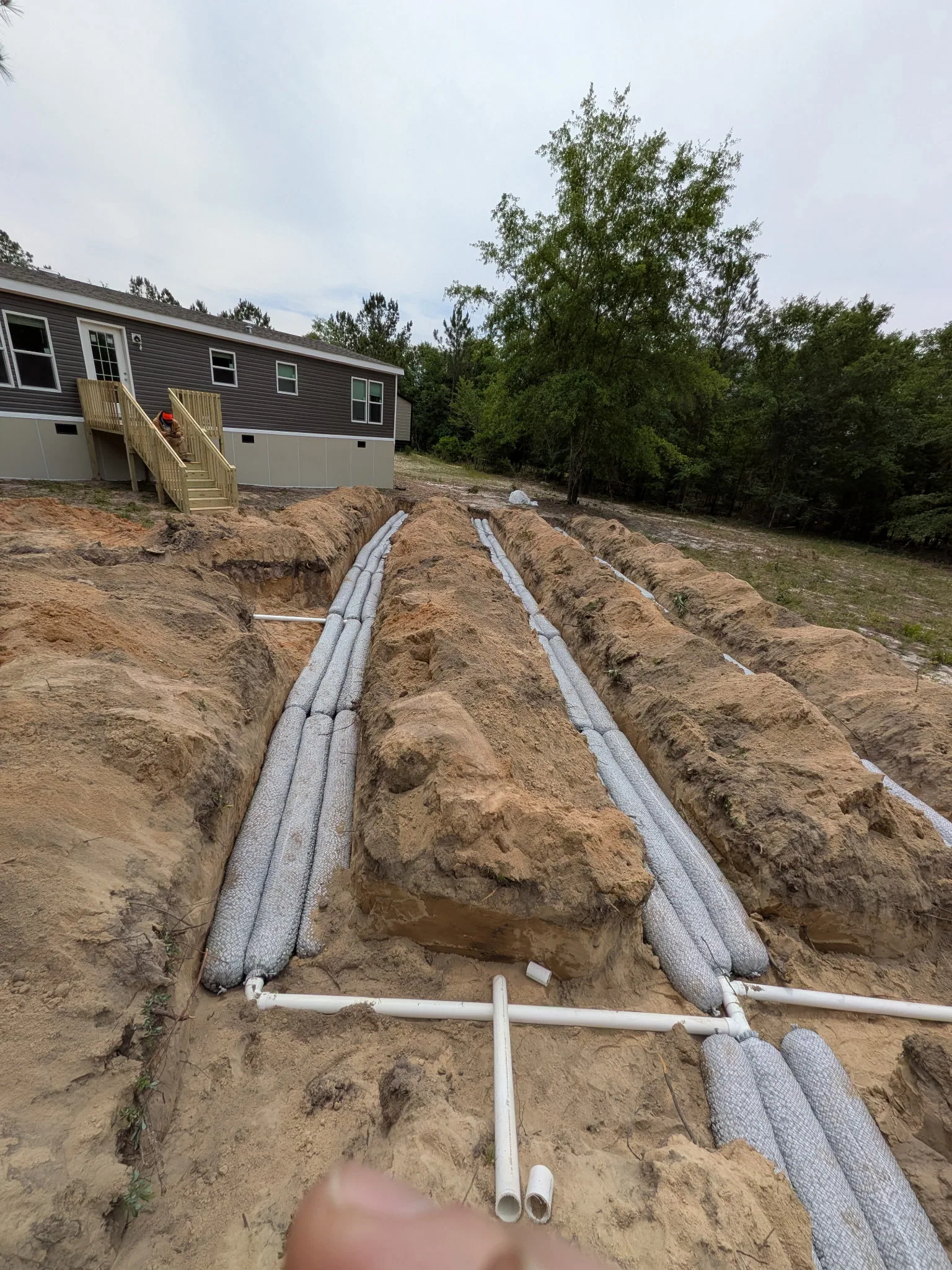
Drain Fields and Leach Lines
Drain Field Installation in Aiken, SC Built for Local Soil
Addie's Septic Tank Service Inc provides drain field installation in Aiken, SC for new systems and failed fields, with gravelless bundles or stone trenches. Call (803) 593-2578 for a free estimate.
When the Field Gives Out
Signs You Need Drain Field Replacement
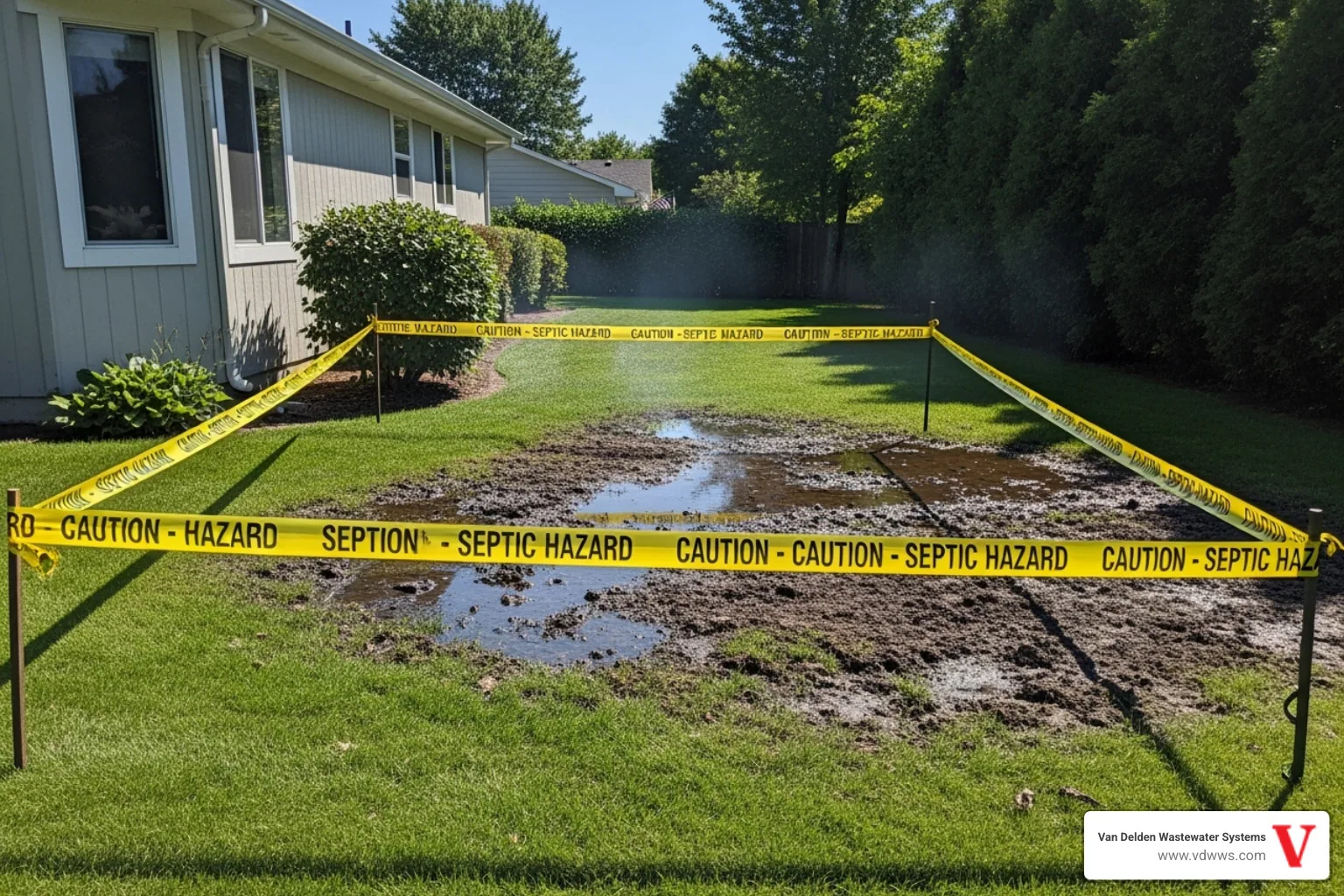
A drain field wears out slowly, then all at once. The signs usually show up in the yard before they reach the house, and catching them early can keep a field repair from turning into a full replacement.
When several of these show up together, the soil under the field has likely stopped taking water. Before recommending drain field replacement, we inspect the whole system to see whether the field has truly failed or a smaller fix will bring it back.
- Water pooling or soggy ground over the field, even in dry weather
- Grass over the trenches that grows spongy or unusually green
- A sewage smell in the yard near the field
- Slow drains throughout the house that return soon after pumping
- Sewage backing up into the lowest drains
Final Treatment Stage
How a Septic Drain Field Treats Wastewater
The drain field is where household wastewater receives its final treatment. Clear liquid leaves the septic tank, flows to a distribution box and spreads evenly through a set of trenches buried in the yard. From there, it soaks into the soil, which filters it before it reaches groundwater.
That only works when the soil is right. The state's soil evaluation looks at soil color to see how high the water table rises and at texture to see how well water drains. A field in tight red clay needs more trench length than one in loose sand.
Fields fail when solids escape the tank and clog the soil, when roots or vehicles crush the lines, or when more water arrives than the field was sized for. Good drain field installation in Aiken, SC starts with a field matched to the soil and the household.
Lighter Trench Options
Gravelless Drain Field Options for Area Yards
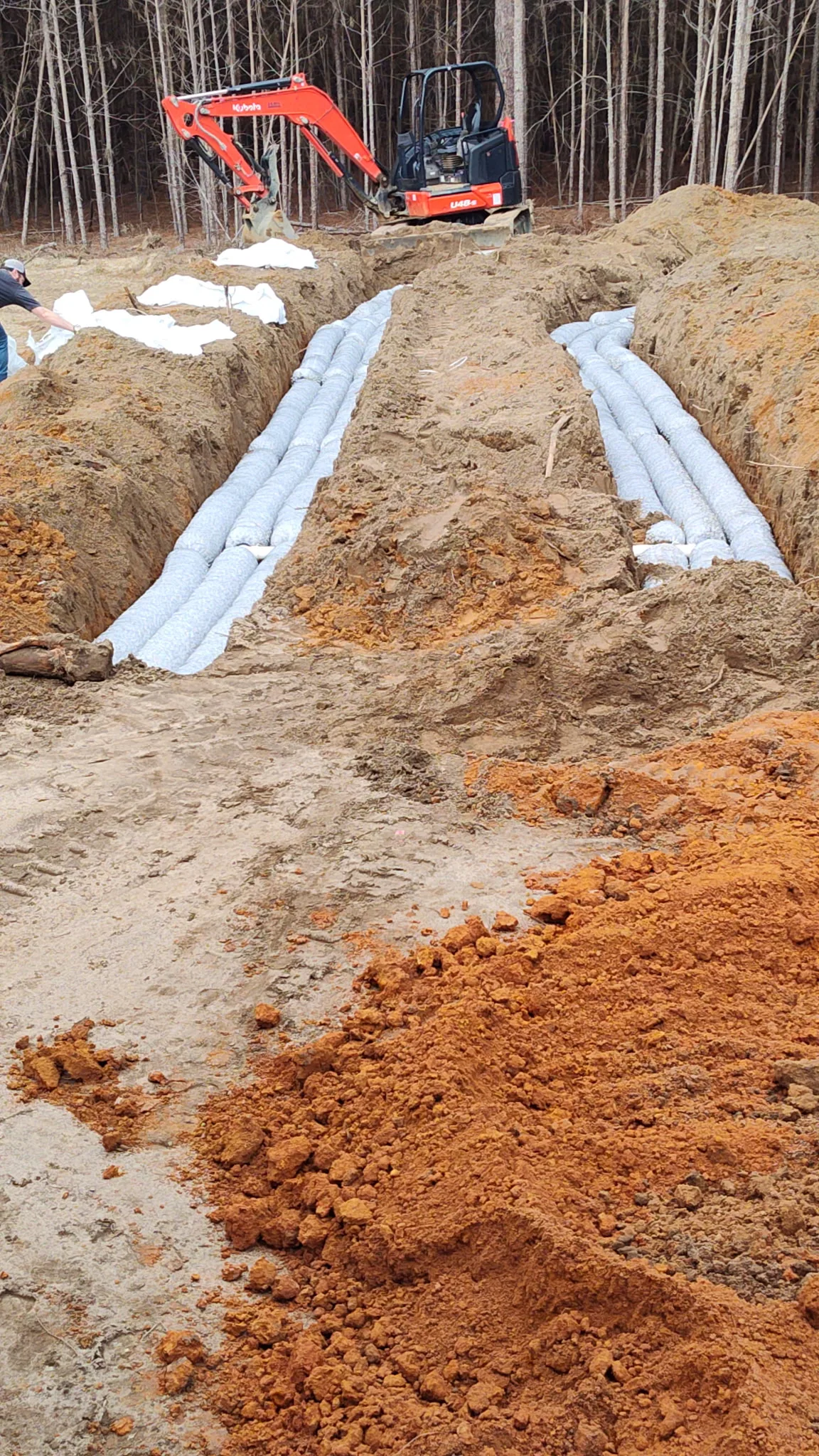
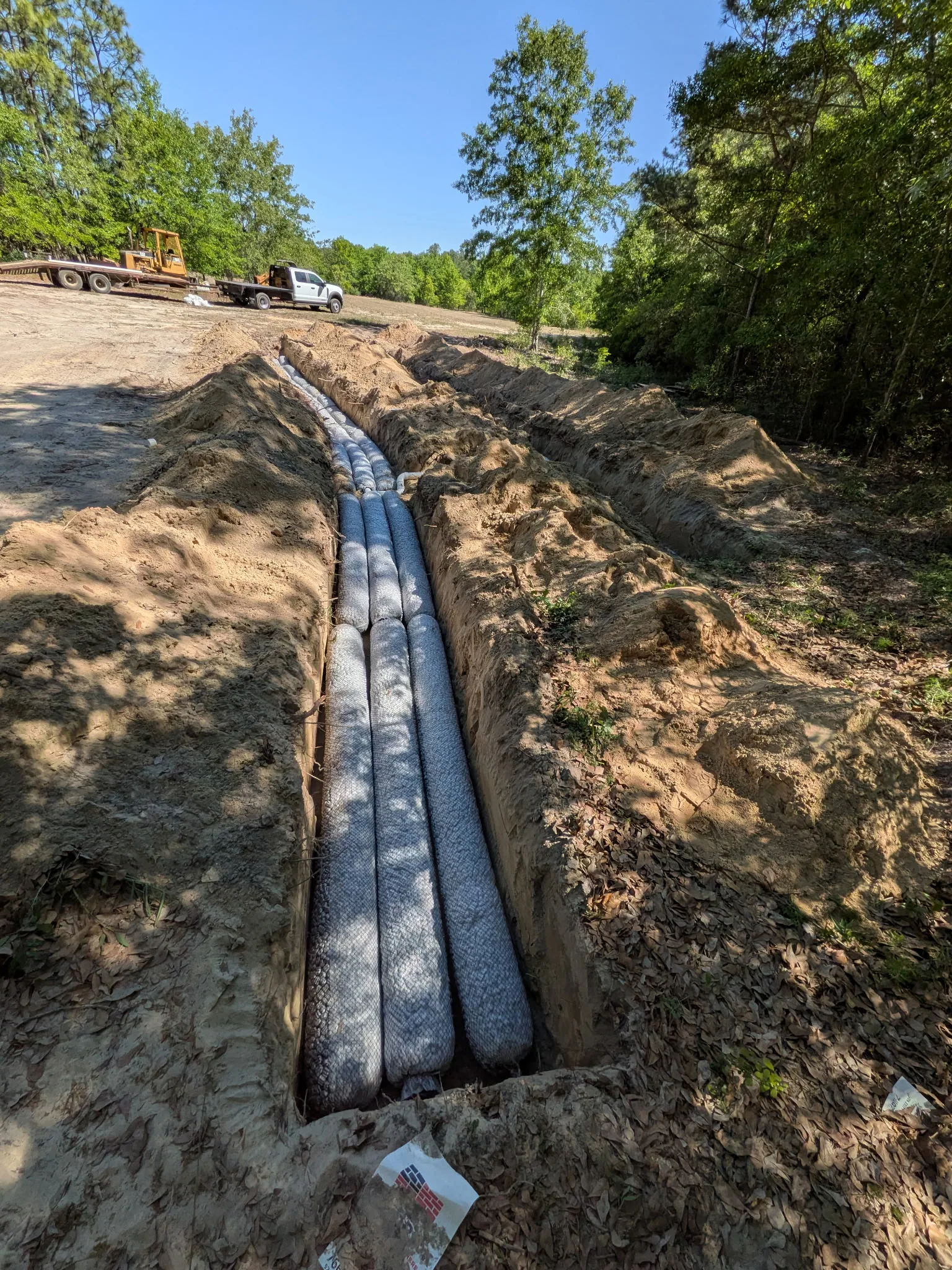
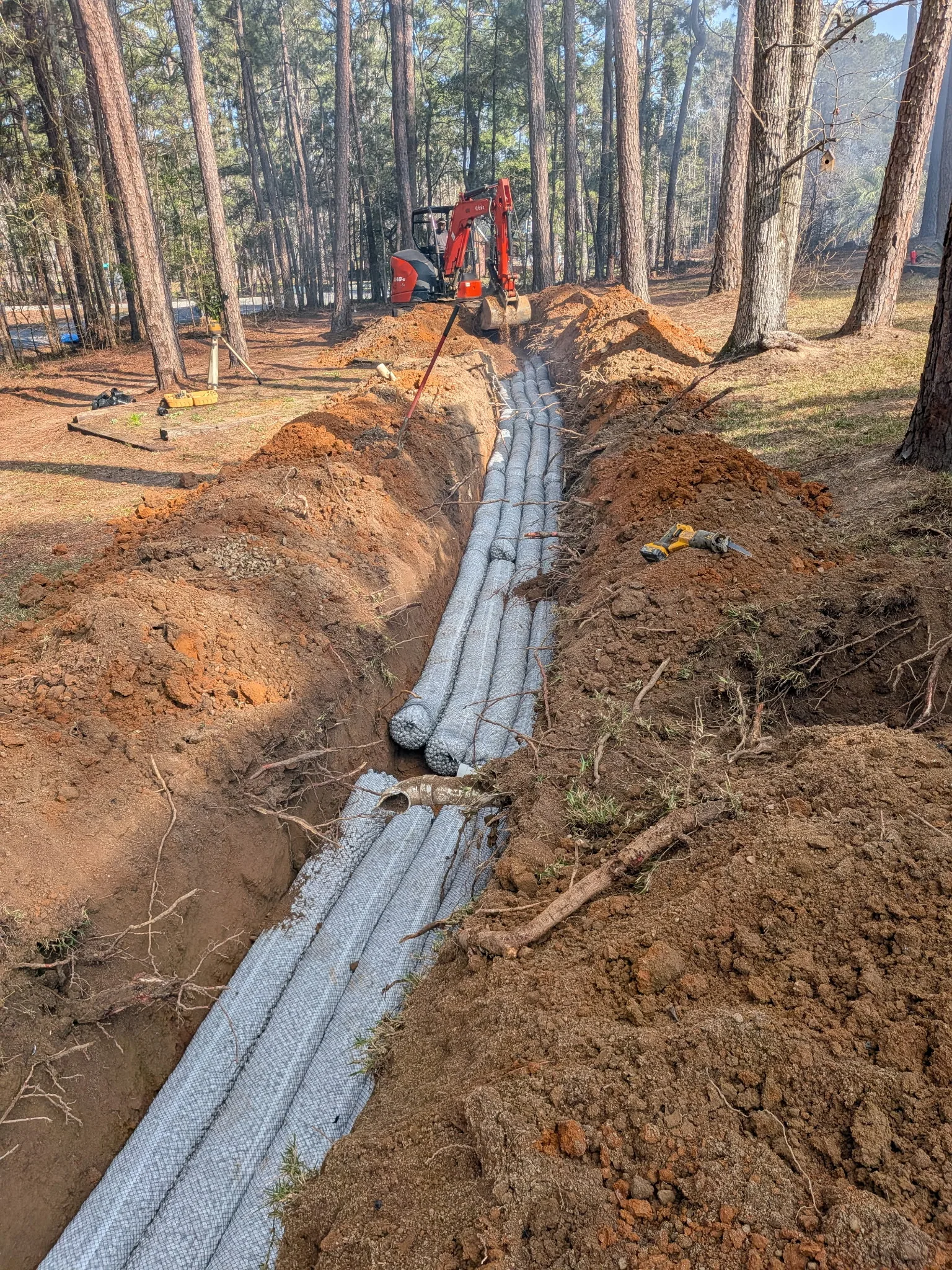
A gravelless drain field uses lightweight bundles of wrapped aggregate laid in the trench in place of loose stone. The bundles hold the trench open and spread the water across the soil, much like a traditional stone and pipe field does.
Because the bundles are light, they can go into tight backyards and wooded lots where hauling stone would tear up the yard. That makes them a common choice for drain field installation in Aiken, SC on older, established properties. Our crew lays them in straight or curved trenches, connects them with PVC headers and ties every line into the distribution box.
EZflow is one gravelless product we install, and our page on EZflow septic systems covers it on its own. We still build traditional stone trenches where the site or the permit calls for them, so the choice fits your lot instead of the other way around.
Trench by Trench
Our Drain Field Installation Process
A drain field only works if every trench sits at the right depth and grade. Our crew follows the permit's layout and checks the grade at every step.
-
Inspect the System
We look at the tank, the distribution box and the existing field to confirm what failed and whether the tank should be replaced along with the field.
-
Permit and Layout
New fields in South Carolina are laid out from the state's soil evaluation and permit. We stake the trenches where the permit places them.
-
Dig the Trenches to Grade
Our mini excavators cut each trench while a grade rod and laser level keep the depth and slope exactly where they need to be.
-
Lay the Lines and Box
We set the distribution box, place the bundles or stone and pipe, and connect the PVC header so water spreads evenly through every trench.
-
Inspect, Backfill and Grade
After the field passes its state inspection, we backfill the trenches and grade the yard to shed rain away from the new field.
Fix or Rebuild
Drain Field Repair or a Full Leach Field Replacement
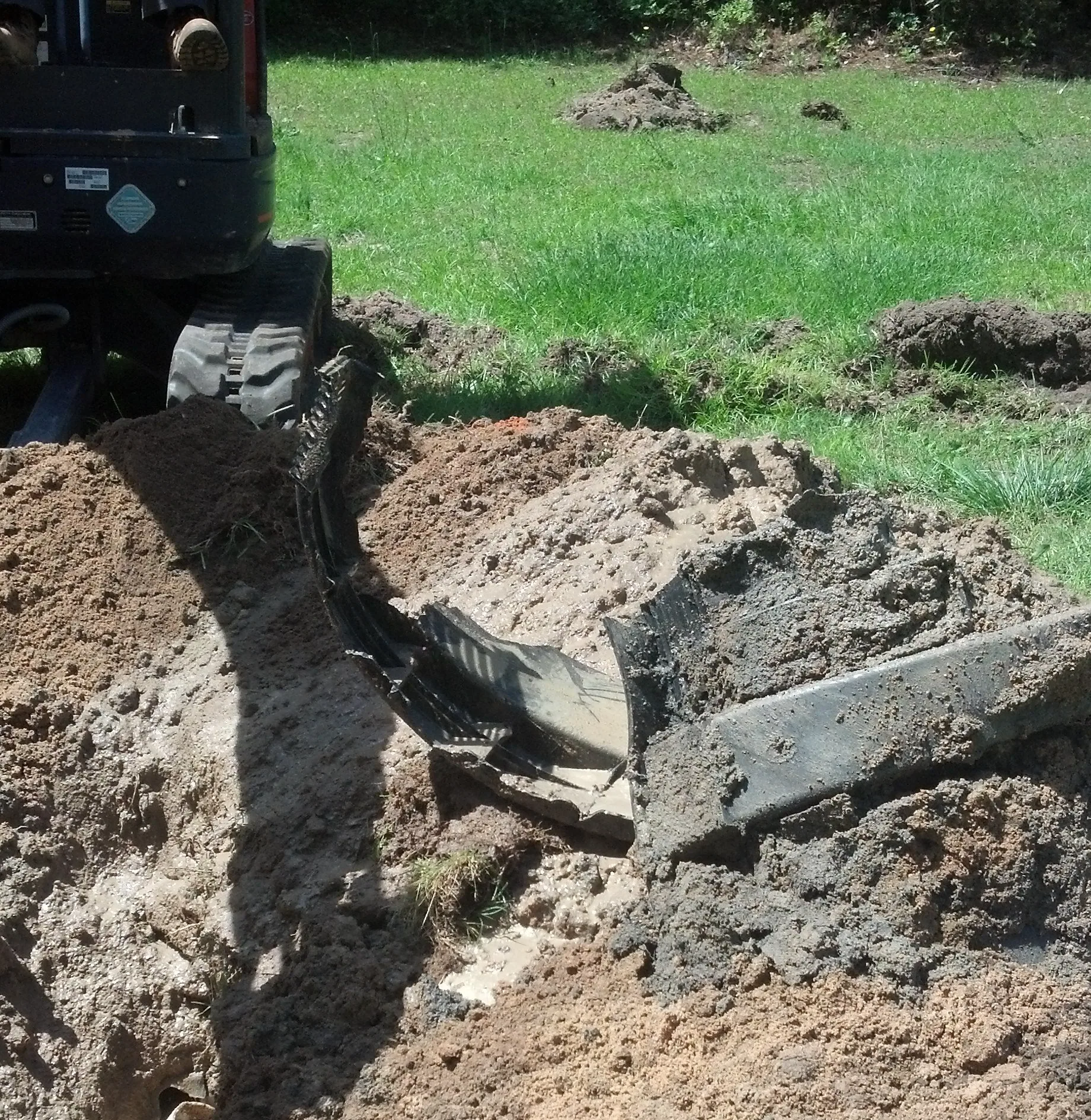
Not every problem in the field means starting over. Drain field repair can fix a crushed line, a broken distribution box, a cracked plastic chamber or a stretch of pipe clogged with roots. If the soil is still taking water, a targeted repair can buy years of service.
When solids have sealed the soil itself, repair will not hold, and leach field replacement is the lasting answer. South Carolina sets aside a repair area, about half the size of the original field, when a lot is evaluated, so there is often room to build the new field beside the old one.
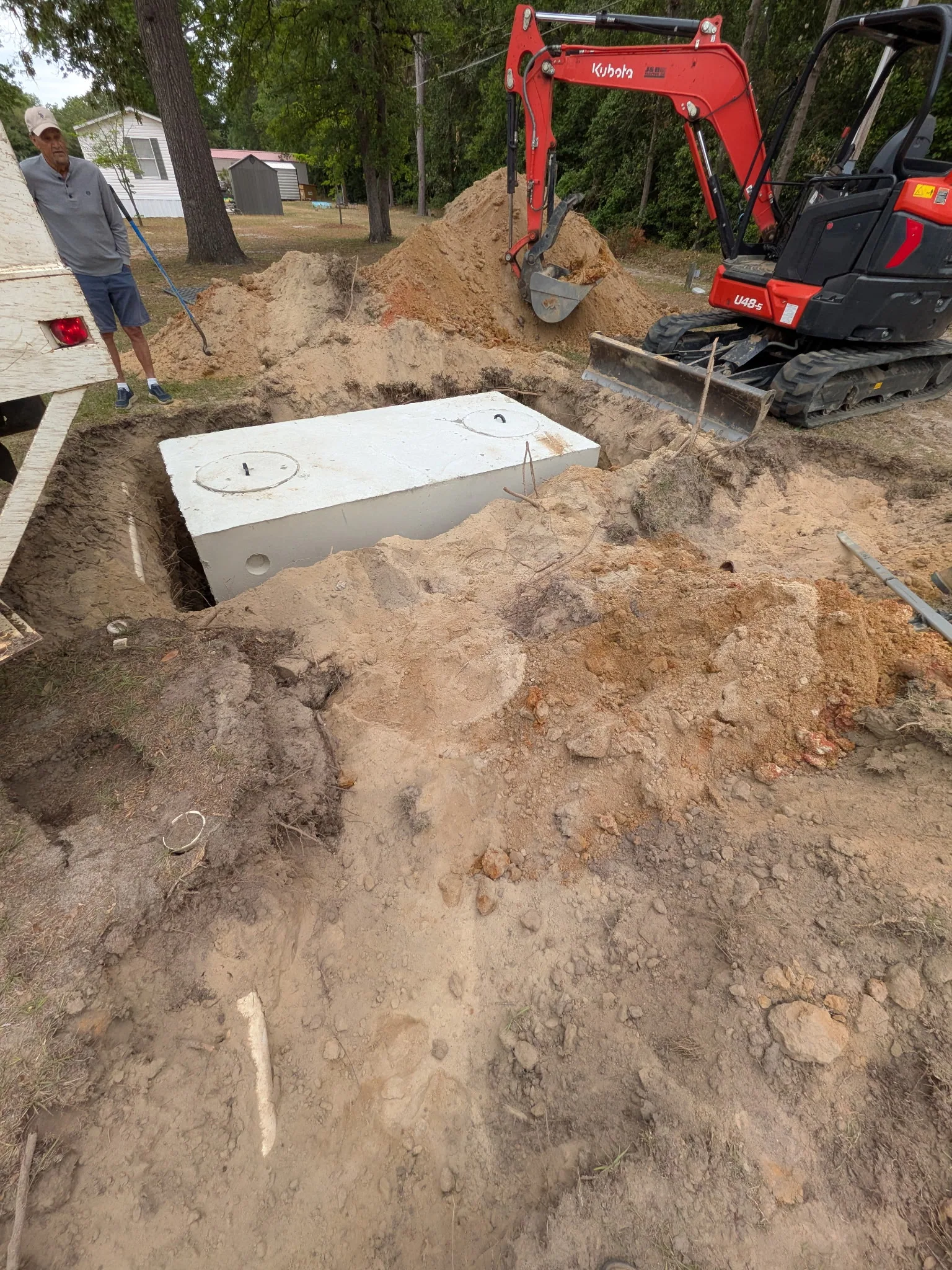
A new field will clog the same way if the tank keeps sending solids, so we check the tank as part of every job. When the tank is also worn out, a full septic system installation may make more sense than a field alone.
Sizing the Field
What Drives the Price of a New Drain Field
The size of the field is the biggest factor. Bedroom count and the soil evaluation set how many feet of trench the lot needs, so a slow clay lot often costs more than a sandy one. Gravelless bundles and stone trenches also differ in materials and labor.
Access and site work come next, and they often decide how many days the crew spends on site. A field behind a fence, among pine trees or on a slope takes more time to reach and dig. Removing old lines, crossing a driveway or adding a pump tank for an uphill field all add to the job.
We walk the site and give a free estimate before any work starts, so the cost of drain field installation in Aiken, SC is clear before a single trench is dug. Prices are competitive, and we accept Visa, MasterCard, American Express, Discover, cash and money orders.
Protecting the Field
Caring for a New Drain Field
A new drain field can last for many years with a little care. Keep cars, trucks and heavy equipment off the field, since their weight can crush the lines and pack the soil. Plant grass over it, and keep trees and large shrubs well back so roots stay out of the trenches.
Send rain somewhere else. Point gutters and downspouts away from the field so storm water does not soak the soil it needs for wastewater.
The best protection starts at the tank. A typical household should have the tank pumped and checked about every 3 to 5 years, so solids never reach the field. Spreading laundry across the week instead of doing it all in one day also gives the soil time to keep up.
Clay, Sand and Pine Lots
Why Our Drain Fields Hold Up in Local Soil
Addie's Septic Tank Service Inc is family owned and operated and has built and serviced septic systems for more than 60 years. Our crew has dug trenches in red clay hillsides, sandy pine lots and fenced backyards all over Aiken County, and we bring that experience to every new field we build.
We are licensed, bonded and insured. We use our own mini excavators, grade rods and laser levels, and the same crew handles the trenches, the distribution box and the final grade.
Experience with local soil is what keeps a field working. Knowing how clay holds water after a storm, and how quickly sand drains, helps us explain the layout the permit calls for and why each trench sits where it does. That is the difference between a field that lasts and one that floods after the first wet winter.
Across the Midland Valley
Drain Field Installation in Aiken, SC and Across the Region
We handle drain field installation in Aiken, SC and build new fields across the Midland Valley and the counties around it. Older homes in the historic Graniteville mill village often need a field replaced, and our septic service in Graniteville covers Warrenville and Vaucluse as well.
Manufactured home lots and older family homesites keep us busy closer to Augusta too, through our septic service in Belvedere and our septic service in North Augusta. Farther east, see our drain field installation in Williston and Blackville.
Field work is one part of what we offer. Our full list of septic services in Aiken County includes pumping, maintenance and repairs to keep a new field healthy for years to come.
Leach Field Concerns
Drain Field Installation Questions
How do I know if my drain field has failed or just needs pumping?
If the tank is overdue, pumping may clear slow drains for a while. When soggy ground, odors or green stripes over the trenches stay after pumping, the field itself is likely failing. We open the tank, check the distribution box and look at the trenches to tell the difference, then explain whether pumping, a repair or a new field is the right answer.
Is a gravelless drain field as good as a stone and pipe field?
Both types spread treated water through trenches so the soil can filter it. Gravelless bundles are lighter to handle and easier to place in tight or wooded yards, while stone trenches remain a proven choice on many lots. The right option depends on the soil, the permit and the site, and we explain the tradeoffs for your property at the free estimate.
Can a new drain field go in the same spot as the old one?
Sometimes, though often it goes into the repair area the state set aside when the lot was first evaluated. That area is about half the size of the original field and is kept clear for exactly this purpose. Building on fresh soil gives the new field a clean start, while the old trenches rest. We confirm the right location before any digging begins.
Can I park or drive over my septic drain field?
No. The weight of cars and trucks can crush the lines and pack the soil so it cannot absorb water, which shortens the life of the field. Keep vehicles, trailers and heavy equipment off the area, and avoid building patios or sheds over it. A fence, a row of low plants or simple markers can help guests and delivery drivers stay clear.
Will my yard look normal after drain field installation?
Once the trenches are backfilled and graded, the yard starts to recover quickly. The ground may settle a little over the first few rains, and fresh grass seed or sod will cover the bare soil. We grade the area to shed water away from the field and leave the site clean, so planting grass is the main step left for you.